
Founder Evidence
The Work Behind TRC
You shouldn't take life advice from someone who can't show their working. Fair enough. Here's mine.
Everything below is real, dated and kept. Some of it is decades old, some of it is current, and one part of it is a business that ended — which stays in the record, because a receipt is not only proof that you won. It is proof that you are prepared to examine the full record.
Chapter 01
The work came first
75,000+ Words
Manuscript length
5 Main Parts
+ Closing Notes
Receipt 01
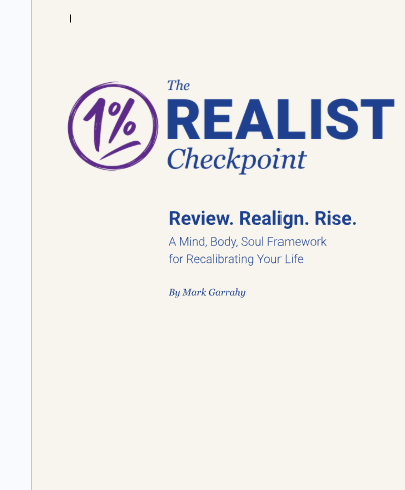
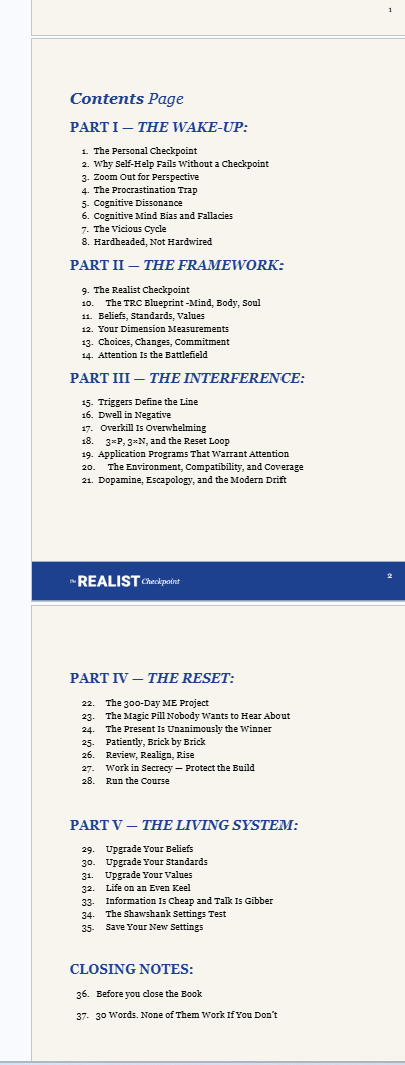
The manuscript exists
A complete working manuscript of more than 75,000 words, organised across five main parts and closing notes, currently being prepared for public release. The method went on paper in full before anything on this site was offered to anyone — the writing precedes the marketing rather than following it, and the file, word count and contents are all current and real.
What this proves
The product is not a wrapper for a pitch. A complete working manuscript existed before this site launched.
Receipt 02
A system before the app
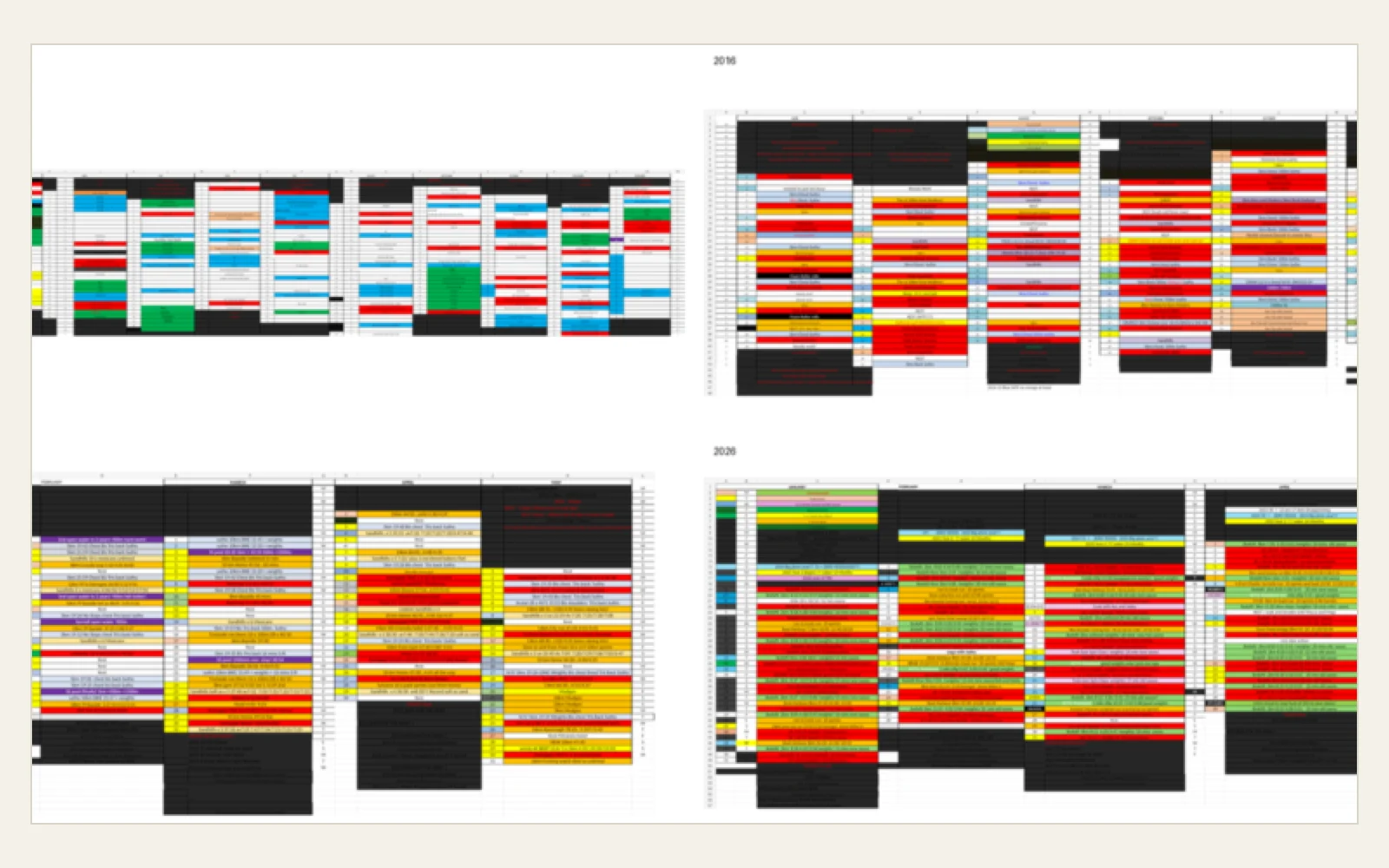
Mark's deliberately primitive computer calendar — a year split into two halves on a spreadsheet, opened on a laptop — used in versions for more than fifteen years, with surviving files from 2010, 2016, 2022 and 2026. Training, alcohol, events, wins, misses and ordinary life all get a line, and the small inconvenience of opening the laptop is the point: it forces a deliberate pause to review, plan and update.
What this proves
The ME Project's daily rhythm is a fifteen-year habit, not a product feature invented for a launch.
Chapter 02
Kept when nobody was watching

Receipt 03
A diary before the app
A physical handwritten travel diary from 1993–94, covering a year overseas across Thailand, Europe and the Middle East, still on the shelf more than thirty years later. Parts of it are embarrassing to read back, and that's precisely the value — the person who wrote it couldn't see who he was becoming, but the pages caught it anyway.
What this proves
The private-evidence idea has been tested on the founder across three decades. It wasn't invented for a launch.
Receipt 04
Ordinary life, kept privately
Roughly six years of a near-daily private photo record — coffees, car parks, sunrises, family moments — with honest gaps where life got in the way. None of it was taken for an audience, which is why it works: scrolled back, it plays like a small film of a life that would otherwise be forgotten.
What this proves
Private evidence accumulates into something no feed can produce. The gaps never broke the record.

Chapter 03
Standards you can measure
Receipt 05
Measured effort
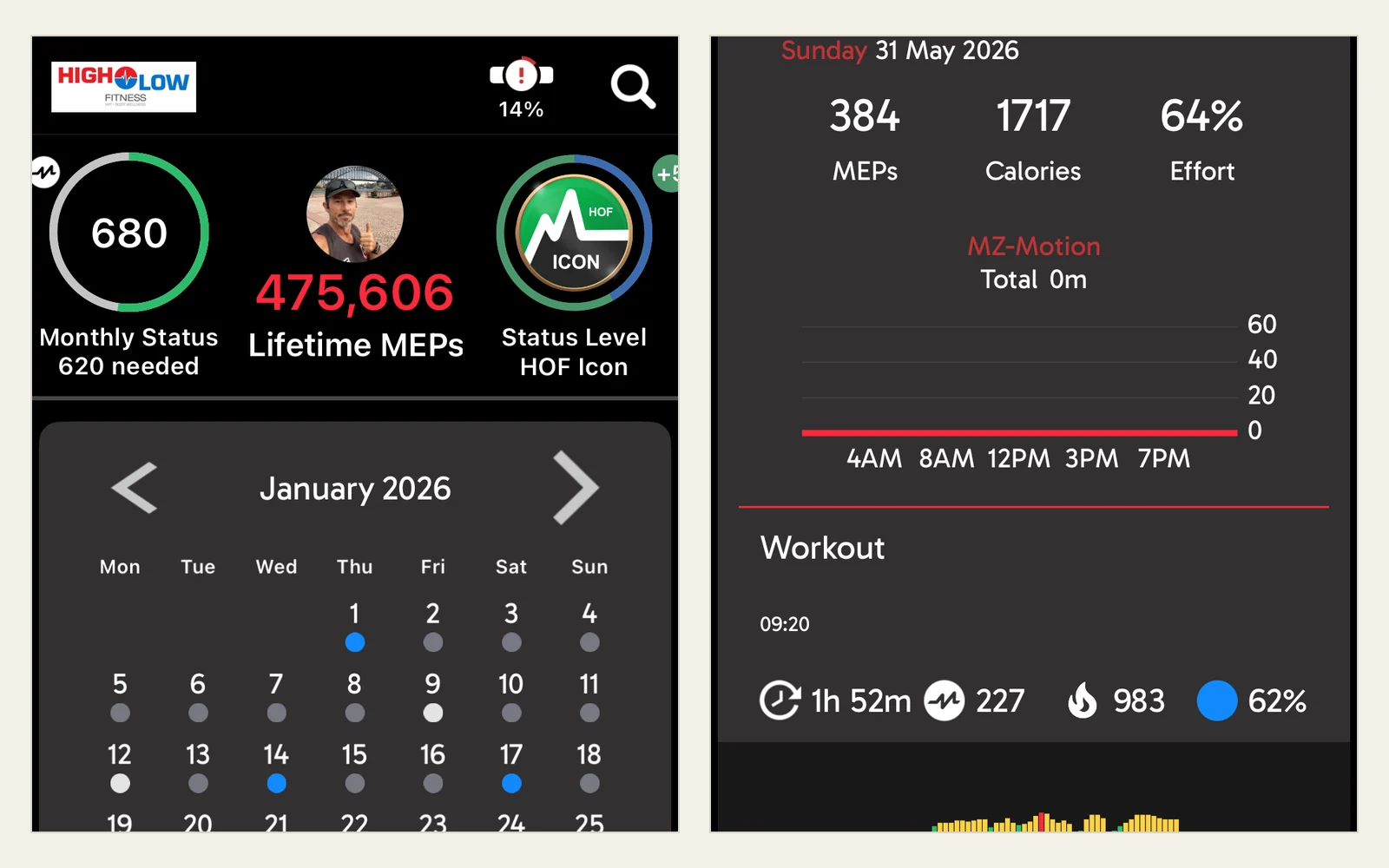
More than 475,000 lifetime Myzone Effort Points — years of measured heart-rate training on the record, not reconstructed from memory. Myzone is a tool Mark personally uses; no sponsorship or partnership is implied. The number itself isn't the achievement. The years of showing up behind it are.
What this proves
When TRC talks about effort, standards and evidence, the founder's own data has been on the meter the whole time.
Receipt 07
A finish line changes the work
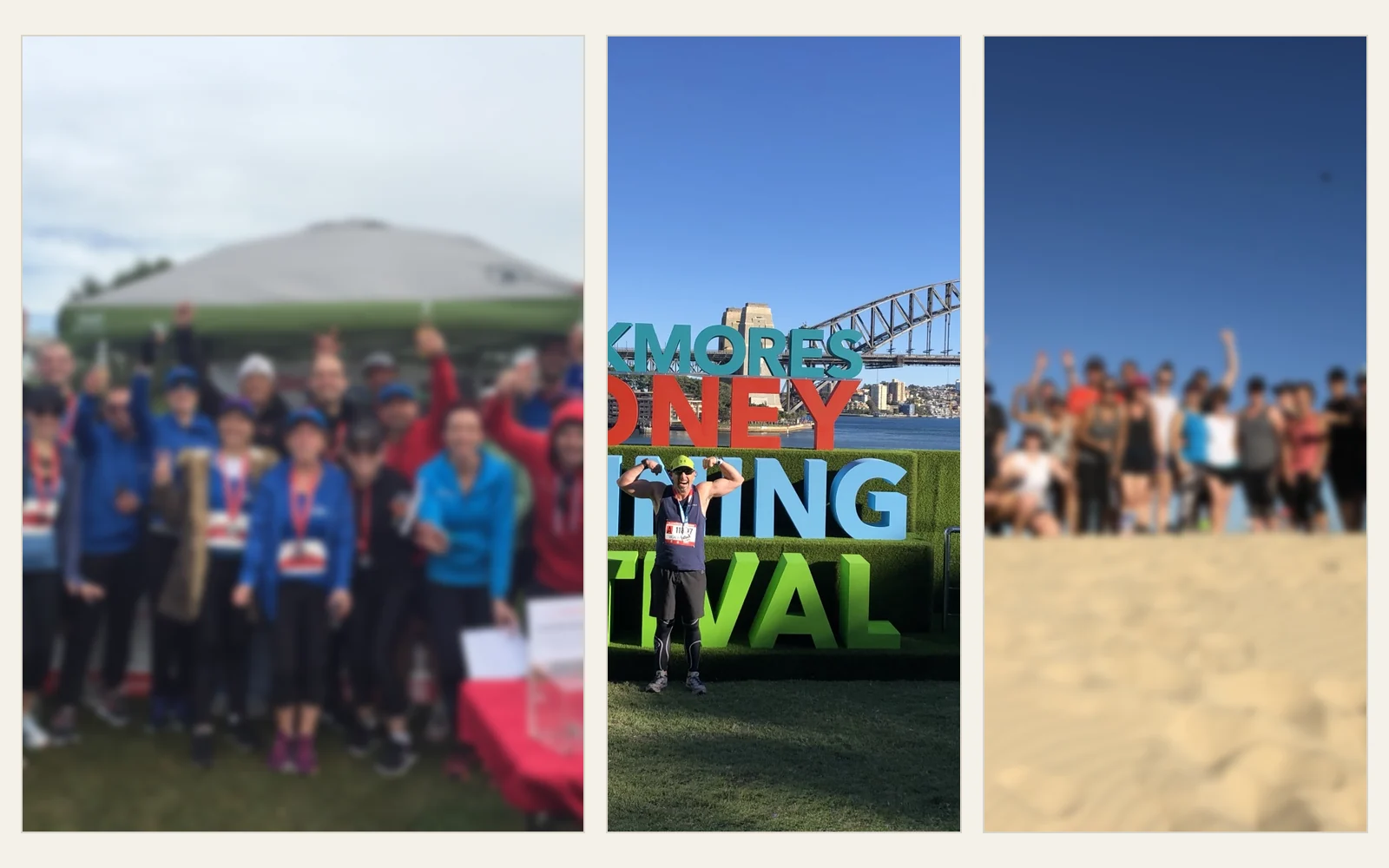
Start lines and training blocks, with members alongside — Sutherland to Surf runs, Sydney running festival events, triathlon and cycling training, and group sessions in the Wanda Sandhills. The pattern across all of it: a date on the calendar organised the months before it in a way motivation never did.
What this proves
The ME Project's fixed finish line isn't a marketing device — it's a mechanic the founder used repeatedly and shared with the people he trained.
Chapter 04
The whole record, not the highlight reel
Receipt 06
Built together. Tested in the real world.
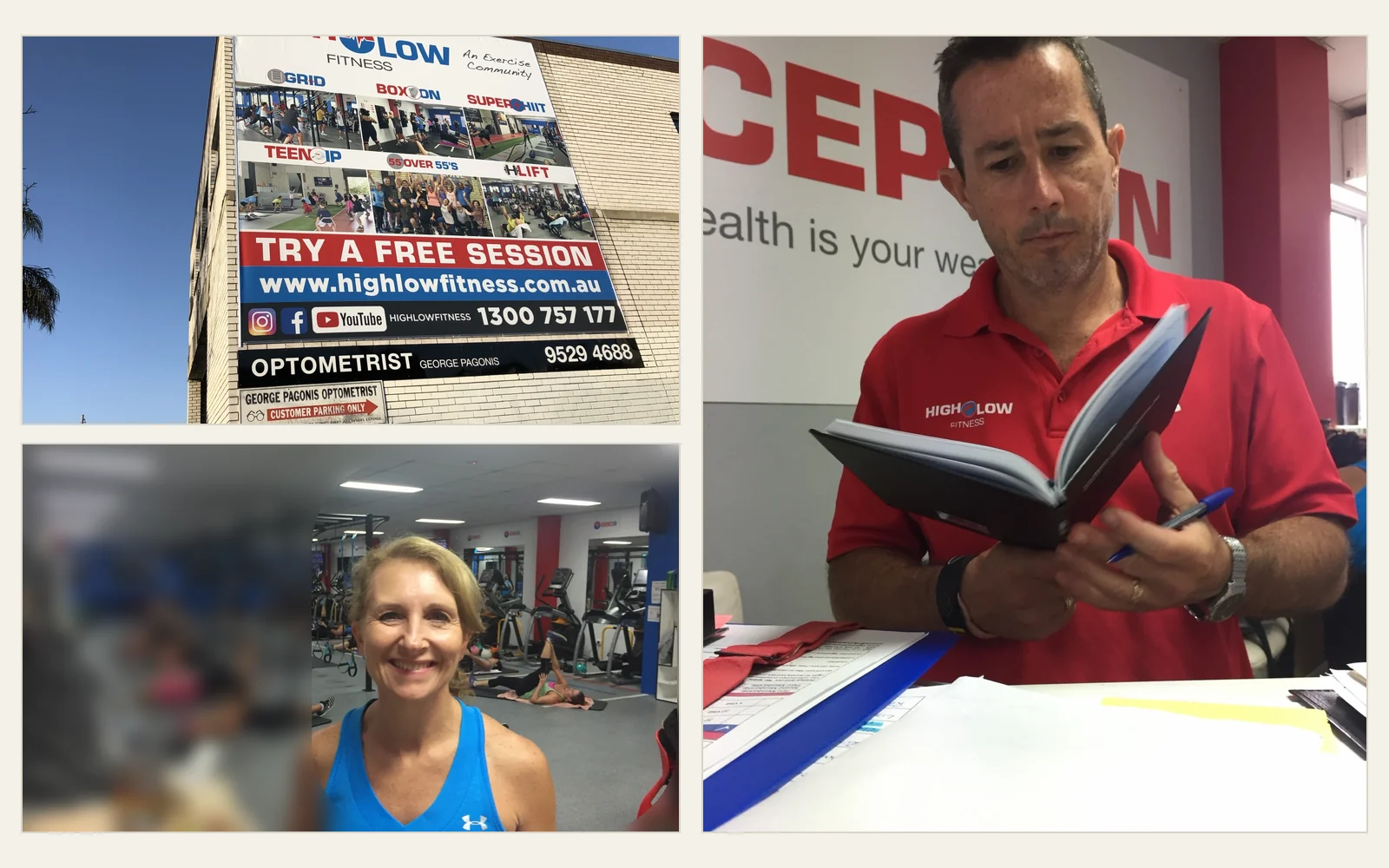
HighLow Fitness — built and operated by Mark and Kerrie Garrahy: four sites across Sydney, with premises, classes, staff, structured programs and community events. The raw lessons behind TRC — about standards, excuses, identity and change — were lived here at close range, one adult at a time, years before the method was written down. It was never a solo story, and it isn't told as one.
What this proves
The framework's lessons about identity, standards and change were tested on the founder in a real operating business, not reverse-engineered from theory.
Receipt 08
The full record
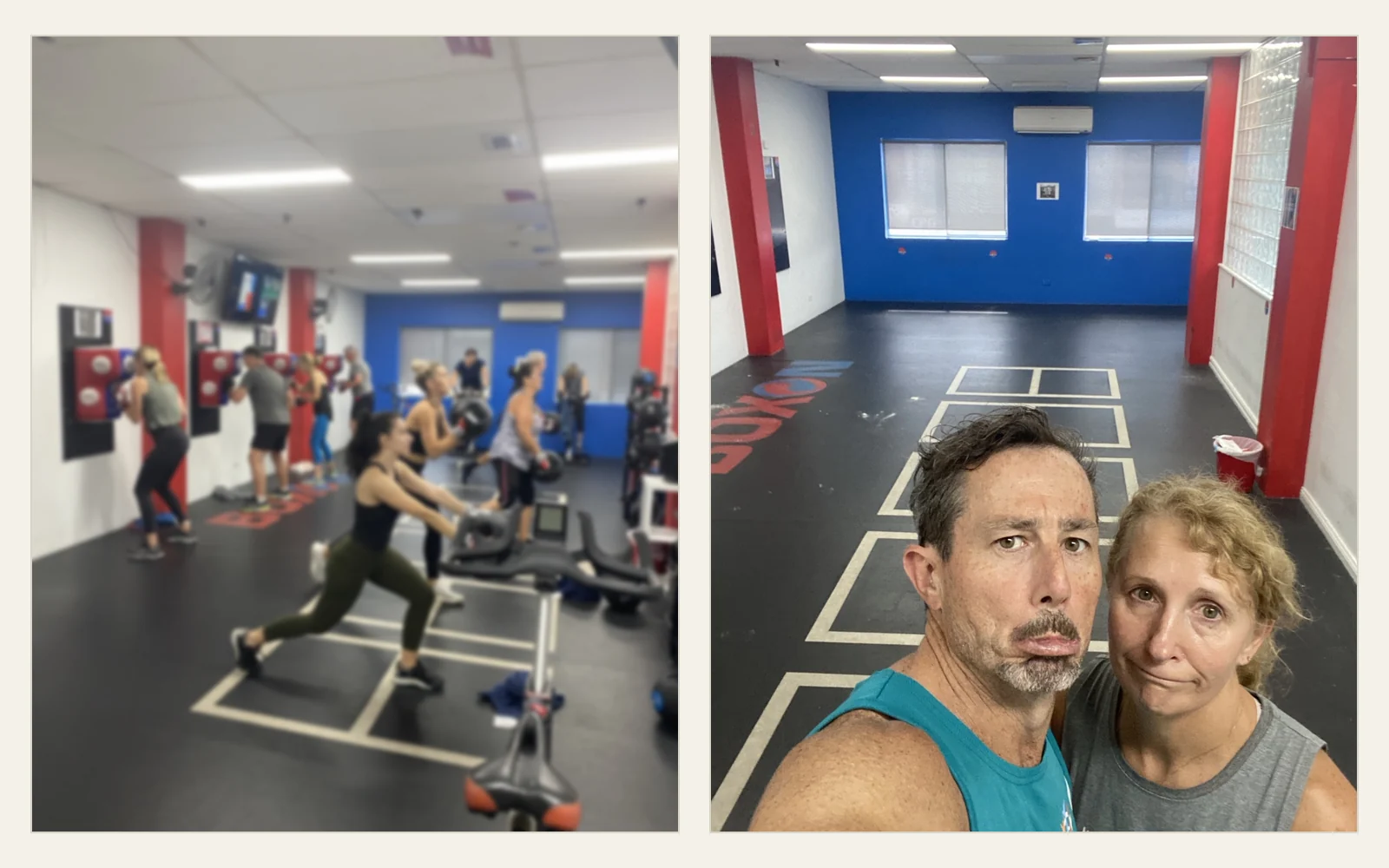
The busy room, and then the empty one. HighLow eventually closed after a difficult mix of COVID disruption and the realities of leases and scaling — and some of the calls along the way belonged to its founders, which is how operating works. The closure stays in the record beside everything built before it, because a framework about honest review cannot begin with a curated biography.
What this proves
Showing the ending as plainly as the wins is the entire standard TRC asks of its readers.
None of this makes the method automatically right. It makes it lived. Judge the writing for yourself when Part I lands.
Start here